



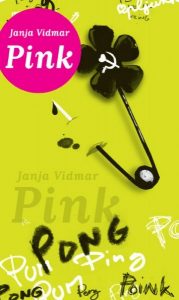
Pink
Book not yet available in English
Summary:
Curious Janca is experiencing the ups and downs of growing up: she fails in her preparations for the school festival, her first kiss demands a change of identity, she discovers “the freaks,” more or less successfully eludes parental control, she starts hanging out with Maribor’s biggest losers, matures and experiences her first real love. These are memories of childhood and adolescence in Maribor in the seventies, when the backdrop of growing up were the pioneers and juniors, Tito, the apartment buildings for the working-class people, and “the freaks and the punks.” Though the setting is somewhat different from the world we live in today, the way the sensitive and insecure Janca experiences it, is very similar to what we might feel. (source: publisher)
Edited by: Mestna knjižnica Ljubljana
Comment:
Through autobiographical elements, the novel tells a story about adolescence in Maribor in the seventies. The main character, Janca, is struggling with, as any teenager does, herself, with her family, and with her education. She is trying to find her way in different social situations, and she is falling in and out of love. She is growing up. One of the main assets of the author’s narration this time around is the abundance of humour and (self-)irony, which she skilfully uses whenever she might slip too much into nostalgia. The third-person narrative is effectively complemented by dialogues, consistently and coherently written in the Maribor dialect. The author uses it and its various linguistic devices to paint all the nuances of the generational and personality traits of the different literary characters and to effectively characterize them. The text and the story about adolescence offer the reader a glimpse into life in Maribor during the last years of Tito’s Yugoslavia. A life that was not exclusively bright. The novel, which the author dedicates primarily to her own generation, is an excellent read for a much broader range of readers, starting with the generation of today’s youth. The book has received the Večernica Award and the Golden Pear Mark of Quality.