



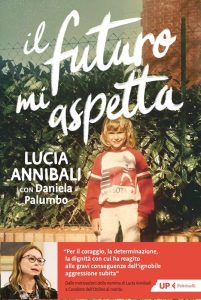
Il futuro mi aspetta
(The future is waiting for me) Book not yet available in English
Summary:
The last memory of her former life is the doorstep. It all began there, on the evening of April 16, 2013, when Lucia returned home and found a man. His face was covered, and before she could even try to escape, he threw acid in her face. The burns were severe, but even in that terrible moment, Lucia had the clarity to understand two things. Nothing will ever be the same again, and she knows who is behind this atrocious attack: it is the man who never accepted the end of their relationship. It is the beginning of a journey of pain, treatment, and countless surgeries for Lucia, in order to return to a normal life. But this slow and exhausting journey will also offer her a second life and a new awareness.
Edited by: Centro MeTRa - Università di Bologna (Italy)
Comment:
Through her testimony as a survivor of violence perpetrated by her former partner who refused to separate from her in 2013, Lucia Annibali enhances the importance of female self-determination. This personal resource is fundamental in addition to the supportive and life-saving network of sisterhood. Her writing spurs young female readers to draw on their inner strength to overcome aesthetic prejudices and gender stereotypes. Those features underpin patriarchal society, which confuses responsibilities and places the blame on female victims (secondary victimization). Sharing her personal story felt as a civic duty for the prevention of men’s violence against women and it comes with a call for collective commitment and social co-responsibility. In addition to the moral duty to speak for those who did not survive, the transmission of Lucia’s individual memory aims to help other young women recognize the micro-violence perpetrated by male partners. This intergenerational dialogue also contributes to the construction of a female genealogy. Her first-person narrative, sometimes self-deprecating, rejects the secondary victimization of women. She does not want to elicit pity or spread anger. On the contrary, through empathetic and vulnerable language, she aims to raise concerns about toxic relationships, increase self-awareness, sow love for life, and be an example of personal success. Working through one’s self-esteem is also vitally important for regaining control of life after traumatic events. Post-traumatic disorders, economic and professional repercussions, and psychological sequelae are other topics addressed by the author to explain, during institutional and public meetings, in schools, and in prisons during dialogues with perpetrators of violence, that the consequences of these violent acts are not limited to temporary physical damage. The book also seeks to emphasize the importance and difficulty of managing contradictory emotions in contexts of extreme tension and suffering. It highlights the priority of mental health and the support that can be found (or not) in the psychological journey of introspective work for personal rebirth and a new life. Since no one can save themselves alone, Annibali demonstrates that violence against women is an injustice for society as a whole, including through her political experience. Another message of resistance to patriarchy is liberation from the narrative of romantic love in which men must be possessive and jealous. Love, like friendship, should be a therapeutic relationship based on reciprocity, which heals, enriches, and helps you grow: it does not destroy you as a person. Reiterating that abuse is not love, the writer illustrates the cycle of violence and the dynamics used by the abuser to weaken the victim and create (among other things) emotional dependence. This reading for teenagers starts from a toxic heterosexual relationship, but this does not exclude the recognition of similar attitudes within LGBTQIA+ couples.