



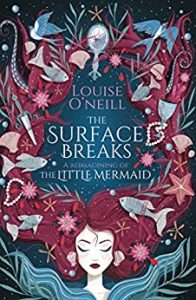
The Surface Breaks: A Reimagining of the Little Mermaid
Summary:
This novel reimagines the classic Hans Christian Anderson tale The Little Mermaid. It keeps many of the tale’s original features: Gaia, the little mermaid, dreams of escaping her claustrophobic home underwater, where she is constantly restricted by her family and societal conventions. She sees glimpses of hope for a different life as her fifteenth birthday approaches and with it permission to break the surface into the world above the sea. Unlike the original version of the fairytale, Gaia’s journey does not involve sacrifice for a prince, but examines the oppression girls and women face and focuses on the power of female relationships.
Edited by: Dublin City University
Comment:
Though a reimagining of the classic tale, The Surface Breaks sticks closely to many elements of the original, bringing the sinister and misogynist element of the original to view for a young adult audience who are perhaps more likely to have encountered Disney’s sanitised version. Feminism is infused in the patriarchal world of the novel and is particularly notable in its exploration of the power of female relationships and the reinvented character of the Sea Witch, Ceto, who is presented in the narrative as a powerful feminist figure who understands the bind all women find themselves in, regardless of their social position. The book is concerned with female desire, the shame felt as a result of desire, and the consequences of acting upon desire for its female characters. Male desire is experienced brutally by the female characters who are subject to it, and much of the novel is bleak in its examination of rape, violence and of abuse, including control and the issue of consent. However, it also hints at powerful aspects of female sexuality and discovering sexual pleasure without shame. Unlike the original, the novel ends with the power of discovering and claiming one’s own voice, and the power of sisterhood.